

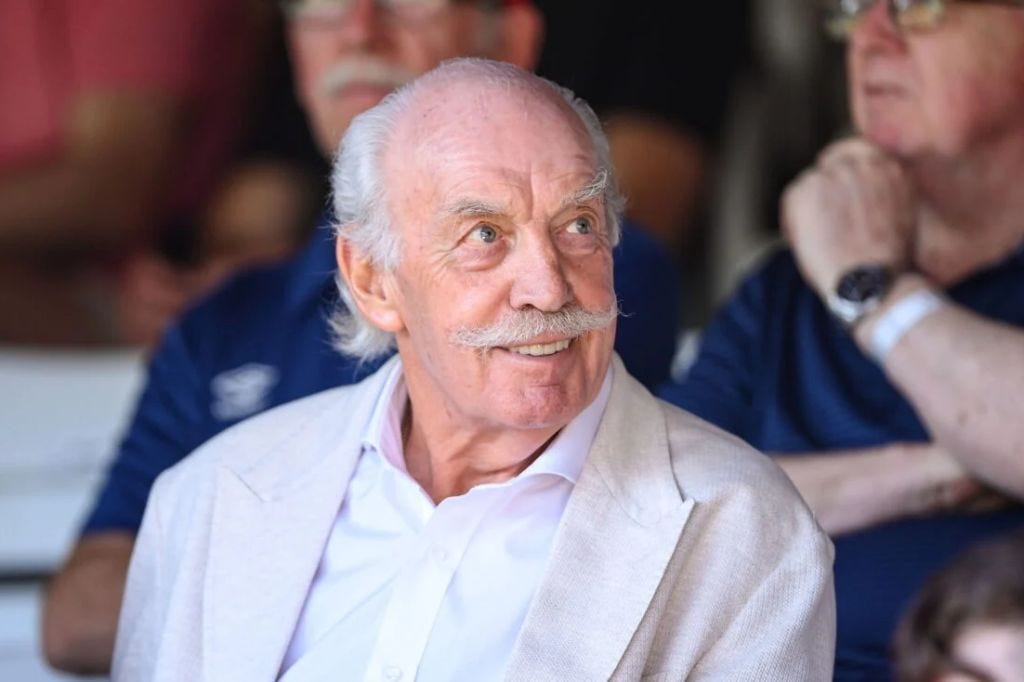
Celtic are in crisis, and let’s stop pretending otherwise. This is not just a bad spell, not just a transfer hiccup, not just one or two unfortunate decisions. This is a club that is fractured from top to bottom, with the supporters left to pick up the pieces once again.
The anger is there for a reason. Fans can see what is happening - poor planning, mixed messaging, public embarrassment, and a boardroom that seems far more interested in control than accountability. When players walk away, when deals collapse, when excuses come thick and fast, that is not bad luck - that is a failure of governance.
And here’s the brutal truth: Celtic are a football club with no football strategy. They are a club reacting to pressure, reacting to headlines, reacting to outrage after the damage is already done. That is how reputations rot. That is how trust disappears. And that is how a club starts to feel like a machine running on fumes. That is Celtic Football Club present day under Dermot Desmond and Michael Nicholson.
The club is being dragged into one crisis after another, and far too many people in power are insulated from the consequences. Meanwhile the fans are expected to keep paying, keep turning up, and keep swallowing the same tired spin. Celtic are in crisis because there are no standards set, the accountability is non-existent, and the gap between the boardroom and the support is a chasm.
Celtic’s real problem is power
Celtic’s crisis is not just about one bad window or one undercooked transfer strategy. It is about power, who holds it, how it is exercised, and why a 34.64% shareholder can dominate the culture of a club without ever owning a full majority. Dermot Desmond’s stake was built through a long sequence of investment, underwriting and share-issue support, and today it remains the single most important lever in Celtic’s governance.
That is the central issue supporters need to confront, because every argument about managers, CEOs and recruitment eventually runs into the same wall: the boardroom structure that Desmond has shaped for decades.
The anger around recent transfer failures has only sharpened that point.

How Dermot Desmond’s holding grew
The history matters because it explains why this story is not simply about a wealthy investor. Public reporting places Desmond’s shareholding at 34.64%, with his position as the club’s largest shareholder stretching back to the mid-1990s. It’s also noted that he underwrote significant share issues in the 2000s, helping Celtic stabilise the balance sheet and fund projects such as Lennoxtown - since 2005 he has not invested his own money in the club, taking more money out in dividends in the past 21 years - reportedly around £7.5 million!
In plain terms, that meant Desmond was not just buying stock; he was repeatedly using his financial strength to absorb what other investors did not take up, and that is how influence grows in practice.
A 34.64% stake is not a formal majority, but it is large enough to shape outcomes, block hostile moves, and set the tone of governance. If other big shareholders are institutional and effectively aligned with financial stability, then the practical outcome is a voting bloc that rarely shifts against him. That is why criticism of the current regime cannot simply focus on the CEO and one or two cronies; it has to move up the entire corporate structure that empowers the CEO and the board.
What the law allows
The legal route is more serious than a noisy and chaotic AGM, because company law gives minority shareholders tools that are real, narrow, and potentially disruptive. Section 994 of the Companies Act 2006 allows a member to petition the court where a company’s affairs are being conducted in a way that is unfairly prejudicial to members’ interests. Section 260 also allows a derivative claim in the company’s name for breach of duty, although the permission threshold is not easy to clear. And section 303 allows members to require directors to call a general meeting, which matters if enough organised shareholders can actually coordinate.
That is the real battleground - not internet anger, but organised shareholder action. The law does not let a 34.64% shareholder simply become the club’s day-to-day owner by force of personality; directors still have statutory duties, and company affairs still have to be run in the interests of the company as a whole.
If supporters want leverage, they need to think like shareholders, not just like customers or match-going fans. That means records, coordination, formal complaints, and pressure that can survive beyond the news cycle.
Why unity matters
This is where the split among supporters becomes self-defeating. If different groups pull in different directions, the board can simply wait for the noise to fade and for the anger to disperse. When fans are divided between competing banners and personalities, the club’s leadership does not face a single, disciplined challenge; it faces several smaller ones that can be ignored, co-opted, or patronised.
That is exactly how entrenched power survives.
So the focus should be on one serious campaign with one clear target - governance reform and accountability. “Not a Penny More” only matters if it becomes part of a broader shareholder strategy rather than a slogan floating above disconnected pressure groups. A unified front can force better scrutiny of the board’s decisions, the handling of recruitment, and the relationship between executive management and the dominant shareholder. Division only helps the people who already control the platform.

The transfer damage
The latest transfer stories are not just about failed negotiations; they are about reputational damage.
Kelechi Iheanacho has left for Bursaspor after Celtic allowed his contract option to lapse and then failed to agree terms after reportedly lowballing him, while Marcelo Saracchi’s situation has also become a public embarrassment for the club after he took to Instagram to call out the club. Whether the wage demands were justified or not, the optics are terrible, two players who had contributed to Celtic’s success last season and wanted to stay at the club have become public evidence of a club at war with its own credibility.
Even if Celtic had rational reasons for rejecting demands, the board has clearly not managed the optics or the messaging well enough to avoid looking chaotic and incompetent.
That matters because modern football is not just played on grass. It is a commercial product, a reputation machine, and a trust economy, and Celtic are damaging all three when key exits are handled badly. Supporters do not need to claim a conspiracy to see the pattern. They only need to look at the accumulation of poor outcomes and ask who has been accountable for them.
So what is the board’s end goal for their continued incompetence, mismanagement, and organised decline of the football club? Why are they hoarding tens of millions of pounds when strengthening would help towards securing Champions League riches?
Where pressure should go
The most productive pressure point is not emotional outrage at one director or one deal, but sustained corporate challenge. That means asking whether the board is serving the club’s long-term interests, whether minority shareholders are being sidelined, and whether the governance model has become too dependent on one dominant figure.
It also means using the remedies that company law actually provides, rather than pretending that one dramatic AGM speech or a raft of questions and criticisms will topple a system built over 30 years. The law is slow, but it is far more dangerous to an entrenched board than social media fury.
The uncomfortable truth is that Celtic’s leadership has become too insulated from consequence, because they know they have the power. If supporters want change, they need to move from noise to structure, from divided camps to one coalition, and from broad anger to specific legal and shareholder actions. That is how power is challenged in a company, and Celtic is a company before it is anything else.
Until fans act like that, the board controlled by Dermot Desmond will keep winning by default.
The one lever ordinary fans still have
Ordinary Celtic fans do not have a seat in the boardroom, and they do not control the share register. What they do control is the one thing the club cannot replace with spin, proxy votes, or polished statements - their money. Outside of the “Not a Penny More” idea aimed at merchandise and hospitality, the most powerful pressure point supporters have is ticket sales, because that is where the board can actually feel the consequence of fan anger in real time.
That is the uncomfortable truth at the heart of the season-ticket trap. Supporters are constantly told that missing out is too risky, that giving up a renewal means losing their seat. The club knows that fear works. It turns loyal fans into reluctant consumers, and reluctant consumers into predictable revenue. Once that fear takes hold, the board can survive almost anything because it knows the crowd will keep coming back. They are taking advantage of fan loyalty.
Why the board notices empty seats
Merchandise boycotts matter, but only up to a point. They sting, they send a message, and they can create noise, but they are easier for a club to absorb than a visible drop in attendance or a clear dent in season-ticket sales. Empty seats, shrinking renewal numbers, and visible dissatisfaction are harder to dismiss, because they travel beyond supporter circles and into every discussion about atmosphere, money, and momentum.
That is why ticket sales remain the one battleground the board actually notices. A club can always explain away online anger. It can always hide behind weather, form, fixtures, or a noisy minority. But it cannot easily explain away supporters voting with their feet. When the terraces tell the story, everyone else has to listen.
The season-ticket trap
The problem is that the season-ticket model is built to make protest feel personal. Fans are not just buying access to football; they are buying identity, habit, and continuity. That makes withdrawal difficult, because it feels less like a political choice and more like walking away from part of your life. The board understands that emotional leverage very well, and it uses it to keep people compliant even when trust has been lost.
That is why any serious campaign has to be honest about sacrifice. If supporters want leverage, they cannot simply vent online and still renew without pause. The whole point of a boycott threat is that it must have consequences the club believes in. Otherwise it becomes background noise, and background noise is exactly what an insulated board can live with indefinitely. And why the call to hold off renewing until the very last day was always doomed to fail.
Questions around Haughey
That is also why Willie Haughey’s Season Ticket Alliances’ sudden appearance and just as sudden disappearance deserves serious scrutiny. A campaign that arrives with noise, launches itself with a high-profile figure like Paul McStay as its ambassador, and then disappears once renewals are in the bag naturally raises questions about its purpose and timing. I am not saying that proves a hidden arrangement; I am saying the optics are hard to ignore, and supporters are entitled to ask what the real objective was from Haughey.

If a campaign emerges, captures attention, and then goes quiet exactly when the most uncomfortable pressure should begin, people will draw their own conclusions. That does not automatically mean bad faith, but it does mean credibility takes a hit. In a support base already split by fatigue and suspicion, silence is never neutral. Silence looks like retreat, or worse, like a tactical pause designed to defuse anger at the moment it should be building.
The real test
The real test is not who says the boldest thing on a podcast or who posts the angriest blog online. The real test is whether ordinary fans can convert frustration into pressure the board cannot ignore. Ticket sales are still the sharpest edge of that pressure, because they hit the club at the core of its commercial model and expose the gap between loyalty and compliance.
Until supporters are willing to use that leverage, the board will continue to treat anger and protest as temporary, and renewal as inevitable. That is why the season-ticket issue matters so much. It is not just about seats in a stadium. It is about whether fans are prepared to stop financing a structure that is failing them and the club as a whole.
That is why the argument has to end where it really begins - with the shareholders. The noise around transfers, the anger around the board, and the frustration over season tickets all matter, but none of it will shift a structure as entrenched as Celtic’s unless it is turned into formal corporate pressure.
The next step is not another burst of outrage, another passing campaign, or another round of frustrated debates online. It is shareholders going down the corporate regulation route, using the legal rights available to them, demanding scrutiny, and forcing the club into a forum where the board cannot simply talk its way out of or ignore accountability. That means proper complaints, proper records, proper coordination, and a proper legal challenge.
Because if Celtic is ever going to change, it will not happen through spin or sentiment. It will happen when shareholders stop acting like passengers and start acting like owners with rights. That is the only route that can truly test the people running the club, and it is the only route that gives ordinary fans a chance of breaking the cycle for good.
Celtic’s cash reserves (fans money) are amongst the highest in world football as confirmed by Chat GPT, so why does DD run the business as if it is a Club struggling to survive? There has to be a reason. He must go public and explain his financial strategy because it’s killing the Club. If he fails to do so allegations of “self-sabotage” (for whatever reason)will continue to be made with some justification. I believe that next Season it is certain that he will continue downsizing regardless of success/failure on the pitch therefore I will not renew my Season Ticket for the first time in 32yrs. If we don’t get rid of him, he’ll get rid of us and the Club will be downsized ultimately to a level of insignificance.
Totally agree with all of the above. The supporters must now wise up and hit this mob where it hurts them. We must get change no matter how long it takes. Parasite FC.