

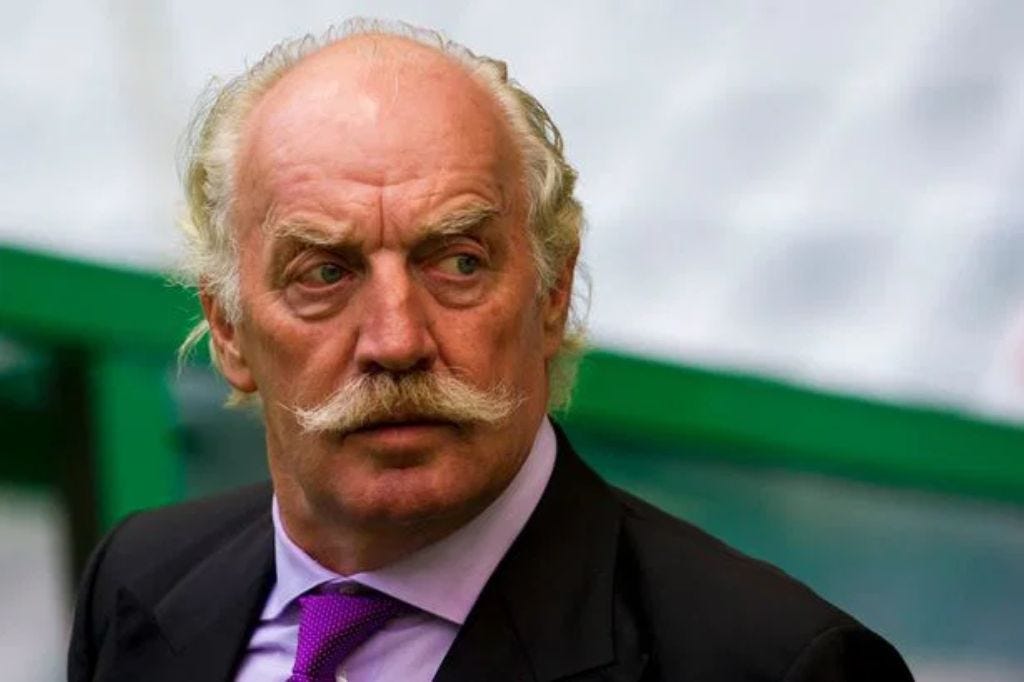
The work of the Celtic Fan Collective over recent months has been passionate, organised and rooted in a genuine desire to change the club for the better. Their commitment deserves respect. But the uncomfortable truth is that, for all their effort, their campaign is ultimately futile. Not because their arguments lack merit, but because the only weapon that could genuinely shake the Celtic hierarchy - the season ticket - is one that supporters will never use.
No matter how frustrated fans become, no meaningful number of Celtic supporters will stand outside Celtic Park and throw away their season books. The board know this. They know that behind every disillusioned fan stands thousands more are waiting to snap up a brief. As long as that demand exists, the hierarchy remains insulated from supporter‑driven pressure.
Real structural change at Celtic will not come from statements, protests or coordinated messaging from fan groups unfortunately. It will come the same way it did in the 1990s, through a Fergus McCann‑style takeover, led by a wealthy benefactor or group willing to buy out Dermot Desmond’s shareholding or secure enough of the shares that Desmond doesn’t control to effectively take ownership. And with Ross Desmond increasingly positioned as his father’s successor in the next few years, the need for such an intervention has never been clearer.
Celtic do not need another carefully worded appeal for patience, process or the long game. They need a club built to win in the modern era. The problem is that the current board have shown repeatedly that they are not equipped to deliver that transformation.
For too long, Celtic have acted as though being the biggest club in Scotland is enough. It is not. Domestic dominance has papered over a deeper structural weakness, a boardroom culture that values control over progress, centralisation over expertise, and caution over ambition. While Europe’s best‑run clubs evolve, Celtic remain stuck in a self‑imposed holding pattern that is over 20 years old.
This is not about one bad transfer window or one disappointing season. It is about a governance model that consistently blocks progress and modernisation instead of enabling it.
A modern football club is not run like a family‑owned corporate relic. It requires clear football leadership, rapid decision‑making, data‑driven recruitment, integrated performance structures and a commercial strategy that treats the club as a global brand. Celtic, under the current board, sit awkwardly between eras - wealthy enough to do more, but structurally incapable of doing it.
That is why so many supporters believe the board is no longer fit for purpose. They have overseen a system that fails to empower football operations, reacts too slowly in the transfer market, and lacks the long‑term sporting architecture required to compete in Europe. A serious club does not wait until a window closes to discover whether its recruitment model works. It has a strategy before the panic begins.
Celtic too often look like a club reacting to events rather than shaping them.
The transfer market exposes this most clearly. Modern recruitment is about precision, timing and alignment. Celtic’s approach continues to be slow, cautious and reliant on late fixes. That is not misfortune, it is the predictable outcome of a governance structure that prioritises protection over ambition. When the football department lacks authority, every window becomes a compromise. And compromise is how clubs stagnate.
The academy tells a similar story. Celtic speak often about pathways, but the structure does not function like a modern development engine. A proper academy is integrated with the first team, aligned in philosophy, recruitment and progression. Celtic’s youth setup is disconnected, as though development is discussed separately from the actual demands of building a competitive squad. That is a structural failure, not a coaching one.
Commercially, the club remains underpowered. Celtic have the fanbase, history, and global appeal to operate as a modern media and retail powerhouse. But that requires investment in digital infrastructure, global engagement, fan data and international strategy. The current board have not demonstrated the urgency or vision to seize that opportunity. Celtic TV content and production values still resembles the Setanta Sports days, and they’ve only just launched an official club app.
This is why criticism of the board is not emotional - it is logical. Celtic are being overtaken by clubs with fewer resources but clearer structures. In Europe, structure matters. Recruitment models matter. Pathways matter. Commercial ambition matters. Above all, leadership matters.
A modern Celtic would look very different, one football authority, an empowered recruitment department, a first‑team‑aligned academy, a global commercial operation and a board that enables rather than interferes. The current board have shown little to no evidence they can deliver that. Their conservatism has become a drag on ambition. Their presence symbolises stagnation.
That is why the conversation cannot stop at surface‑level change. The point is not to swap faces while keeping the same outdated structure. The point is to build a club that is modern, ruthless, intelligent and ambitious. Celtic can become that club. But not under a board that represents the old way. And not through supporter protests alone.
Real change will require what changed the club before, a takeover powerful enough to remove the Desmond dynasty and rebuild Celtic for the modern era.
Andy I've been saying this since about 2007, although you're more eloquent than I am, that Celtic isn't run as a football club we're a shambles on and off the park. The hardest thing for me is that this is going to get much worse before it gets better we've not reached our nadir yet. As John says in his comment and as you yourself have said in your piece that nothing changes unless the Desmonds are bought out and DD has said on numerous occasions he won't sell. So how does the irresistible force meet the immovable object and force change? You're right about the Celtic Fans Collective what can it actually achieve? The fact is they're trying to do something positive without any real hope of achieving their ultimate goal. I wish I was smart enough to figure this out but I know I'm not and I don't think anyone is, if the Desmonds don't want to sell can someone get enough shares to force real change because at the moment I don't see any way that can happen. There must be a wealthy consortium out there somewhere who could come up with a package to oust the Desmonds but even if there was that's only a foot in the door they'd then need money to bring the club up to it's full potential and that's going to take a while to achieve that aim. This is no short term fix it's going to take time, money and the supporters have to be involved in every step of the decision making process but has anyone got the appetite for such an undertaking? That's the long and the short of it, we're in limbo. We invest a lot of money in the club year upon year only to be treated with disdain and as an irrelevance when we're the lifeblood that sustains these directors salaries. Even if the board wanted to change and upgrade the football department none of these people have the ability to do so and so that state of flux is where we'll remain until someone decides enough is enough.
Forget the European "minnows" overtaking us, we now have at home Hearts who are a progressive club with ambitions way past our board who could've won the league very easily.