

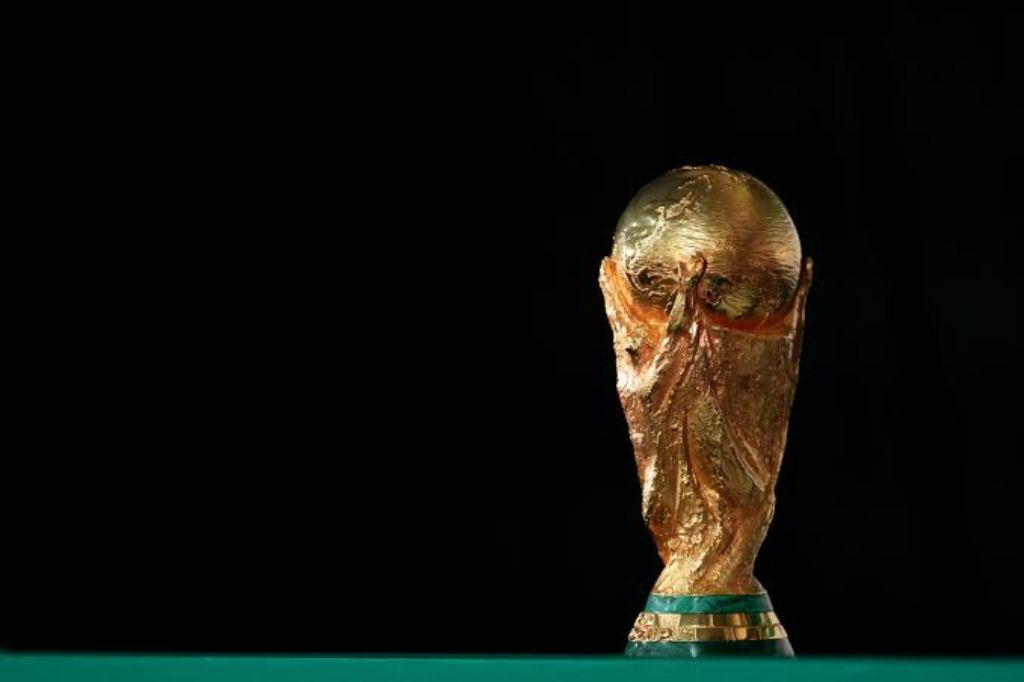
Gianni Infantino’s FIFA is not just tweaking the World Cup; it is steadily reshaping the tournament around a more American sports-business model, and that shift deserves to be questioned. The issue is not simply whether a halftime show is entertaining. It is whether FIFA is changing the character of football’s biggest event to suit a market that does not even value the sport, let alone the World Cup, as highly as much of the rest of the world.
The World Cup was never built like the Super Bowl
Football’s global showpiece has always had its own rhythm. The game is structured around 45-minute halves, a short interval, and a flow that is meant to be continuous and unpredictable. That is part of football’s identity. The World Cup has historically respected that structure, even when it has borrowed some spectacle around the edges with opening ceremonies, pre-match entertainment, and choreographed ceremonies before kick-off.
That is why the growing appetite for a more American-style halftime spectacle feels like more than a harmless production choice. A halftime show changes the logic of the event. It turns a match into a televised platform with an entertainment break built around it, rather than a football match with a show attached. The point is not that football should never evolve. It is that the evolution here seems to be driven less by sporting need and more by commercial packaging.
We’ve even got the World Cup winners being awarded Championship rings rather than medals - with a thousand more available for ‘fans’ to buy. Why?

America is not the natural centre of the World Cup
The argument often made for Americanising the World Cup is that the United States is a huge growth market. That is true in a narrow commercial sense. But it does not mean the World Cup’s existing audience wants the event turned into something closer to an NFL-style broadcast. The World Cup is already one of the world’s biggest sporting products without needing to mimic American television conventions.
FIFA itself has shown that the 2022 World Cup final drew in only 35 million viewers in the U.S., compared to 24 million in France, 12 million in Argentina, countries with less than a fourth of U.S. population. The broader picture is that the tournament’s deepest cultural roots and strongest emotional markets are still outside the U.S., where football is not just a television product but part of national life. The numbers don’t lie - 1.5 billion people watched the World Cup Final in 2022 as Argentina beat France on penalties after a 3-3 draw, compared to an average of 150 to 200 million viewers watching the superbowl worldwide.
That matters because when FIFA adapts the tournament to suit the American market, it is not responding to the majority of its global fanbase. It is chasing a market that is still secondary in football terms, even if it is valuable in commercial terms. That is the key distinction. A sport can be globally huge without bending itself around the country that happens to generate the biggest corporate upside.
Revenue comes first
The most persuasive criticism of FIFA’s Americanisation is that it appears to be about money before fans. FIFA presents itself as a non-profit, but its commercial scale is immense and its “not-for-profit” status does not mean money is irrelevant. It means the organisation says it reinvests surplus funds back into football. In practice, that makes revenue growth even more politically useful, because more income means more projects, more grants, more patronage, and more influence.
The commercial logic is easy to see. Bigger productions attract bigger sponsors. Bigger sponsors mean more broadcast inventory, more hospitality packages, more branded content, and more opportunities to monetise every inch of the event. A halftime show is not just a show; it is another revenue-friendly asset in the premium entertainment economy. It creates more social content, more clips, more ad slots, and more event-day buzz for broadcasters and corporate partners.
That is why the Americanisation argument rings hollow when FIFA says it is about expanding the game. The real effect is to make the tournament more monetisable, more network-friendly, and more attractive to U.S.-style commercial partners. Football fans are told this is about growing the sport. But in many cases it looks more like growing the income stream around the sport.
Infantino’s own incentives
This is where Gianni Infantino becomes central to the debate. He has built his presidency on expansion, spectacle, and revenue growth, and those things strengthen his political position inside FIFA. The bigger the money flow, the easier it is to justify his leadership as successful. The more member associations that receive increased funding, the more support he can cultivate. That is not necessarily corruption, but it is clearly power politics.
His reported pay package of roughly 6 million Swiss francs a year underlines the scale of the incentives surrounding FIFA leadership. Whether or not his personal compensation rises directly with every commercial gain in the exact way critics suggest, the broader system clearly rewards a president whose tenure produces more revenue, more visibility, and more influence. In other words, the commercialisation of the World Cup strengthens Infantino’s Presidency as much as it strengthens the tournament.
His relationship-building with Donald Trump also fits that pattern. It is branding, access, and image management rolled into one. Infantino knows that association with U.S. power gives him reach, legitimacy, and headlines. The Trump connection is less about football than about positioning himself as a global sports statesman with political weight. That helps Infantino, not the average supporter.

The non-profit claim is too neat
FIFA’s defenders often say the organisation is a non-profit and therefore the money goes back into football. That is technically true, but it is also too convenient. A non-profit can still behave like a highly lucrative political machine. It can still concentrate power, reward allies, and treat commercial growth as an end in itself so long as it claims the proceeds are reinvested.
The question is not whether FIFA keeps the money. The question is who controls the money, how it is allocated, and whose interests shape the product that generates it. If the World Cup becomes more Americanised because that helps increase earnings, then the process is being driven by commercial logic rather than football culture. The fact that FIFA can later distribute funds to federations does not erase the original distortion.
That is especially relevant when the organisation is about to benefit massively from a larger and more theatrical U.S.-hosted tournament. The bigger the event becomes, the more money FIFA can funnel into its structures, and the more it can justify its own central role in world football. A “reinvested surplus” can still be part of a system designed to maximise revenue first.
What fans actually lose
The danger is not simply aesthetic. It is cultural and structural. Football’s appeal lies partly in the fact that it does not need the same kind of scripted presentation as American sports. It has pauses, tension, momentum shifts, and a universal format that already translates across borders. Trying to graft on a halftime entertainment model dilutes that simplicity.
It also changes the message of the event. The World Cup should feel like the pinnacle of the sport, not like a globalised version of a U.S. broadcast template. Once you start adding entertainment features to increase “viewer engagement,” you are no longer treating the match as the main event. You are treating it as the container for a content product. That is a big philosophical difference.
Simply put, US fans watch the Super Bowl because it has changed from what was a simple championship game into an unofficial national holiday and a massive cultural event. People tune in not only for the football but for the multi-million dollar commercials, the halftime show, and as an excuse to socialise and eat with friends.
There is also a risk of mission creep. If a halftime show can be justified, then why not longer pre-game content, more sponsor integration, more branded fan zones, more celebrity tie-ins, more broadcast-friendly interruptions? Every step can be defended as modernisation. But the cumulative effect is a tournament that feels less like football and more like a sports-entertainment business show.
A better way to grow the game
If FIFA genuinely wants to grow football in America, there are better ways to do it than rewriting the World Cup’s presentation language. Grassroots investment, better youth development, stronger domestic competition, smarter media coverage, and more culturally resonant storytelling would do far more than importing Super Bowl aesthetics. Growth comes from participation and habit, not just spectacle.
That is the part that gets lost in the marketing. The World Cup does not need to become American to become bigger in America. It needs to be understood on its own terms and sold with respect for what makes football different. The danger is that FIFA confuses visibility with belonging. Just because an American-style production can generate attention does not mean it creates deeper football culture.
In that sense, the halftime debate is symbolic. It is not really about a 15-minute show. It is about whether football’s global governing body believes the sport should adapt to the market, or whether the market should adapt to the sport. Under Infantino, the answer increasingly seems to be the former.
The real question
So is the Americanisation of the World Cup about fans? Partly, but not primarily. Is it about growing football in the U.S.? Yes, but again only partly. The stronger case is that it is about revenue, leverage, and political power inside FIFA. The spectacle helps sponsors, broadcasters, and executives long before it helps ordinary supporters.
And yes, it likely strengthens Infantino personally as well. Not necessarily because every commercial decision directly adds to his pay packet, but because a more lucrative, more visible FIFA makes his presidency more powerful and more defensible. A larger financial pie also means more goodwill to distribute across the global federation system that keeps him in office.
Football does evolve. That is unavoidable. But evolution is not automatically progress. If the sport’s biggest event is being redesigned to satisfy an American entertainment model that its core global audience never asked for, then the burden of proof should be on FIFA to explain why that serves football rather than just FIFA.
“The danger is not simply aesthetic. It is cultural and structural. Football’s appeal lies partly in the fact that it does not need the same kind of scripted presentation as American sports. It has pauses, tension, momentum shifts, and a universal format that already translates across borders.”
The insidious thing is American football doesn’t need this crap either; high school and small college football don’t have endless commercials breaks or glossy presentation, and the short pregame and halftime shows are just traditional marching band performances. Even most major college and NFL games, outside of the excessive artificial breaks, have their own drama and storyline that plays out on the gridiron, requiring no glitz or glamor to pack stadiums and pop ratings.
You’re 100% correct that “Americanizing” of the sport does nothing to actually increase its popularity over here. We find soccer appealing largely because it’s *different* than our sports (continuous movement on a clean field with minimal breaks and no frills) while also containing elements we recognize from our own games (the constant movement of hockey and the strategic trade-offs of basketball played at football’s scale with a pure aesthetic beauty comparable to baseball).
These efforts by FIFA not only alienate the core international fanbase, they fail to attract us Americans who would rather our sports learn from soccer than the other way around.
Players are used to the 15 minute break and there's no need for them to warm down then warm up. You take 30 minutes break and both are going to be needed.
Once again, those that run things have no thought for the very players that people are there to see. Sadly, it has always been thus...