

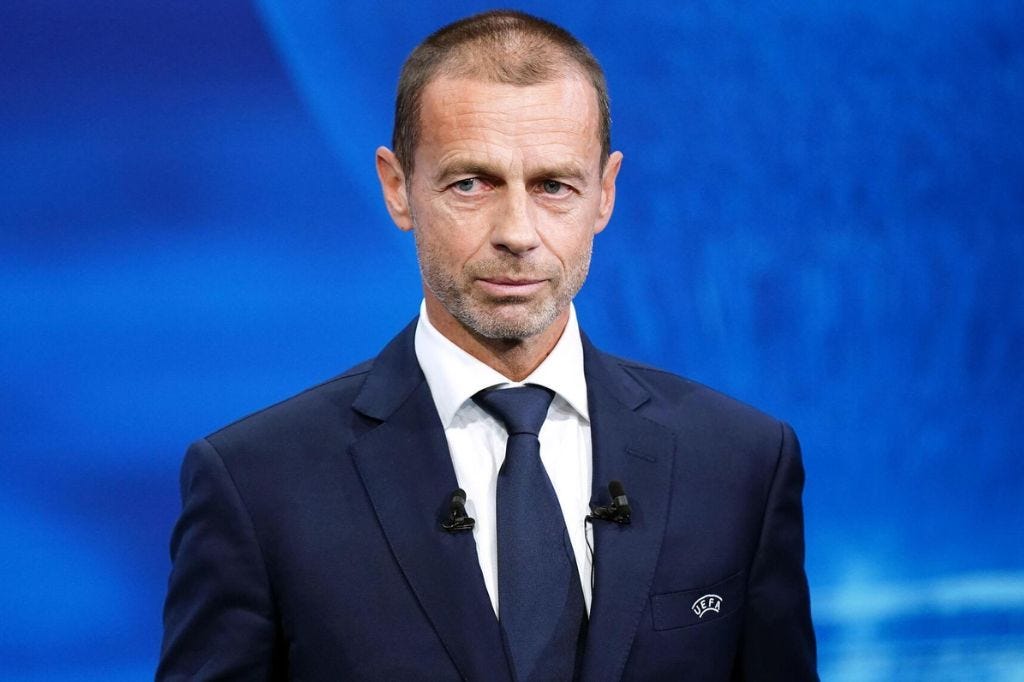
UEFA’s decision to drop its threatened boycott of FIFA competitions marks not a diplomatic compromise but a strategic capitulation. After weeks of sabre-rattling over Gianni Infantino’s ill-fated FIFA Forward Enterprises (FFE) proposal to privatise stakes in the World Cup, European football’s governing body has accepted private assurances that such a scheme will not be repeated, precisely the concession it demanded yet initially dismissed as insufficient.
The reality is stark, UEFA blinked first because it feared that pushing its threats to the limit would still leave Infantino with enough votes to win re-election in March, rendering its entire campaign of ultimatums and legal warnings, mere empty posturing.
The anatomy of a bluff
When FFE surfaced following the conclusion of the 2026 World Cup in July, the backlash was immediate and ferocious. UEFA, alongside CONCACAF and other confederations, threatened to boycott all FIFA tournaments until the proposal was not only withdrawn but accompanied by binding guarantees that no similar privatisation attempt would ever be made again. Infantino duly abandoned FFE within days, apologising for “missteps” and insisting the idea was “off the table”. Yet UEFA doubled down, insisting that verbal retractions were insufficient and that only ironclad, written assurances would avert a boycott.
This hardline stance positioned UEFA as the moral guardian of football’s soul - despite their own examples of selling out of the game to prioritise the big 5 leagues - rallying players, politicians, and fans to its cause. Former players lent their voices to the chorus demanding change, while UK Culture Secretary Lisa Nandy warned against penalising young athletes for governance disputes. The narrative was clear, UEFA would rather sacrifice short-term tournament participation than allow FIFA to commodify the World Cup.
But behind closed doors, a different calculation was underway. The Guardian reported, private discussions between UEFA and FIFA had been ongoing for weeks, with the European body ultimately securing the written guarantees it claimed were non-negotiable. With the Under-20 Women’s World Cup in Poland just days away, six European nations - England, France, Spain, Portugal, Italy, and hosts Poland - faced the prospect of their young players missing a once-in-a-lifetime opportunity. The pressure to relent was immense, not least because a boycott would have alienated the very demographic UEFA claims to protect.
Why UEFA folded
The crux of UEFA’s retreat lies in the March 2027 presidential election. Despite its public rhetoric, UEFA’s leadership, particularly president Aleksander Čeferin, understands that Infantino retains a formidable coalition of support across Africa, the Middle East, Asia, parts of South America and Oceania. Even if UEFA had followed through on its boycott threat, there was no guarantee it would have tipped the balance against Infantino. In fact, a prolonged standoff risked hardening FIFA’s member associations behind their incumbent president, framing UEFA as elitist and disruptive.
Moreover, UEFA’s leverage was always limited. Its threat to boycott FIFA tournaments was a double-edged sword, while it could withhold European teams from events like the Under-20 Women’s World Cup, it could not prevent FIFA from proceeding without them. The tournament would go ahead, UEFA’s absence would be framed as self-inflicted, and Infantino would still collect his votes. The uncomfortable truth was that UEFA had no viable path to force Infantino’s removal through boycotts alone.
The written assurances FIFA provided, though their exact terms remain undisclosed, were sufficient to allow UEFA to save face while backing down. By accepting these guarantees, UEFA can claim it achieved its core demand of a binding commitment that no future privatisation scheme will be attempted. Yet this victory is hollow. The fact that FIFA only issued these assurances after weeks of pressure, and only in private correspondence, underscores that UEFA’s public ultimatum was always a negotiating tactic rather than a genuine red line.
Humiliation for both sides
For FIFA, the episode is another humiliation in a long line of scandals. The very need to issue private guarantees to avert a boycott highlights the organisation’s persistent governance failures and Infantino’s tendency to float radical ideas without adequate consultation. Italy’s football federation (FIGC) became the latest to withdraw support for Infantino this week, citing his “recent initiatives” as incompatible with transparent governance. Yet FIFA’s ability to weather the storm and securing UEFA’s retreat without conceding public ground, demonstrates Infantino’s political resilience.
For UEFA, the cost is reputational. Its leadership gambled that a hardline stance would rally global football behind its cause, only to retreat when the limits of its influence became apparent. The narrative now shifts from “UEFA stands firm against privatisation” to “UEFA backs down after empty threats”. This perception is compounded by the fact that UEFA’s position on Infantino’s removal remains unchanged, Čeferin still believes the FIFA president must resign or face a challenger in March - yet no challenger to Infantino has materialised. But if UEFA could not leverage its boycott threat to extract public concessions, what tools does it have left?
The divide among former players further illustrates the complexity. Some legends rallied behind Infantino, praising his efforts to expand player representation, others called for immediate change. This split reflects a broader truth, that football’s governance is fractured, and no single confederation holds enough sway to dictate terms unilaterally.
The road ahead
UEFA’s retreat does not mean the battle is over. Its executive committee is set to discuss further steps regarding FIFA’s leadership at its Monte Carlo meeting this week, alongside the Champions League draw. The focus will likely shift to building a credible alternative candidate to challenge Infantino in March, rather than relying on boycotts that lack teeth. Yet the episode has exposed the limits of UEFA’s power and its threats ring hollow - without global support.
For now, the Under-20 Women’s World Cup will proceed with European teams intact, a relief for players and fans alike. But the underlying tensions remain unresolved. Infantino survives, for now, but his authority is diminished. UEFA retains its moral high ground in principle, but its credibility as a strategic actor is bruised. The real winners are the private interests that continue to circle football’s biggest properties like vultures, waiting for the next governance vacuum to exploit.
In the end, UEFA’s sabre-rattling was all for nothing. It demanded assurances, received them in private, and backed down - not because its principles were compromised, but because its leverage was illusory. Infantino, for all his missteps, understands the arithmetic of FIFA’s electorate better than UEFA does. And until that changes, Europe’s threats will remain just that, threats.
They (FIFA, UEFA etc) can ram their world cups and CLs up their arses.
The day they turned the Euro Champions Cup into the money grab CL was the day the people's game was finished. 5 league's allow up to 6 of their teams to "qualify" makes a mockery of the so called competition.
I only ever watch Celtic so the CL can GTF, whilst this season's World Cup was fixed to make sure Messi got to the final, it was all about greed, corruption and money.
UEFA have a cheek throwing their toys regarding Infantino, they are as, if not more, corrupt on an annual basis than FIFA.
There's no doubt Murdoch had his nose in the trough when the CL was being touted. Just like the EPL, the game has suffered due to his greed.
I really really hope the football bubble bursts big time when all these "big/rich clubs" go to the wall when the saturated coverage hits the wall and the shit hits the fan.
Extending "global reach of the game" is a euphemism for "more gravy, more trains".
A cynical manoeuvre from morally agnostic Vulture Capital influences to leverage support from the poorest parts of the world where financial corruption is sadly a highly common currency.