

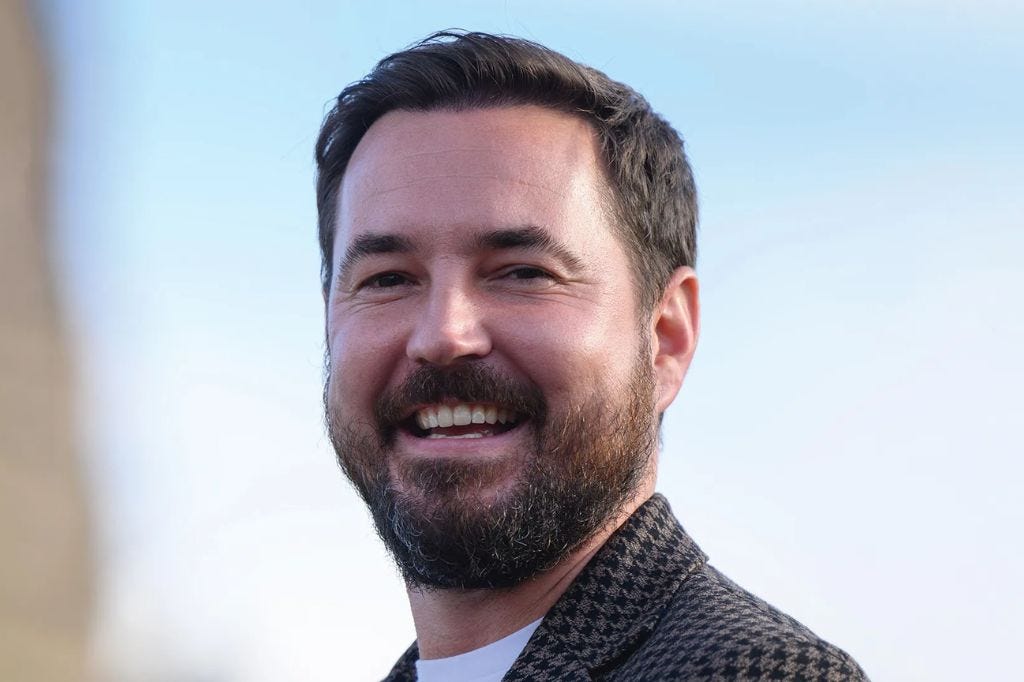
The torrent of abuse directed at Martin Compston for supporting Celtic while urging Morton fans to back their local club tells us less about the actor’s loyalty than it does about the corrosive purity tests that still define large swathes of Scottish football.
Compston, the Greenock-born star of Line of Duty, recently gave an interview to the BBC about Greenock Morton’s financial crisis and called on supporters to get behind the club’s Fighting Fund. Ahead of him taking part in a Q&A with former player Gary Harkins for hospitality ticket-holders before Morton’s 4-1 home defeat to Livingston on Friday night, an event he did not have to do but chose to support. Across social media, the response from the usual suspects was to brand him a “gloryhunter” and demand he should personally bankroll Morton’s £335,000 shortfall after main sponsor Dalrada Technology stopped making expected payments - because he was loaded.
The irony is that Compston addressed this exact criticism back in 2023, noting that Celtic support in his generation was not about chasing titles. “When I was my nephew’s age, it was not a happy time to be a Celtic fan growing up,” he said. He grew up in the 1990s during Rangers’ nine-in-a-row dominance, when backing Celtic offered little in the way of silverware or social cachet. His allegiance, like that of many supporters, is familial and cultural rather than transactional. “People always say about being a glory hunter, but you’re born into Celtic – you don’t have any other option,” he has said.
That is precisely the same for a huge numbers of fans, club loyalty is inherited, not chosen on a spreadsheet of trophies or where they live. The same logic applies to fans living in Greenock who now flock to Celtic Park or Ibrox. Proximity to Glasgow’s big clubs, improved travel and decades of marketing have drawn supporters away from Cappielow, a trend Morton’s own leadership laments. If families can split their identities between local and big club, why is Compston condemned for doing the same?
Morton’s crisis is not primarily about one actor’s football preferences. It is about a club sitting atop 50 years of deindustrialisation and depopulation in Inverclyde. The club faces a £335,000 hole in this season’s budget after Dalrada’s payments slowed from £45,000 a month to nothing by August 2026. A proposed £750,000 investment from multi-club group Estrella for a 35% stake was withdrawn after the group said Morton’s situation had “deteriorated significantly, both financially and on the pitch” since March. A supporter-led Fighting Fund raised almost £50,000, buying liquidity into the new year, but the board says external investment is still required to replace the missing £335k and secure long-term stability.
This did not happen in a vacuum. Inverclyde’s population has fallen by roughly a fifth over the last 50 years; Greenock itself peaked around 76,000 in 1921 before long-term decline. The closure of the big shipyards triggered mass unemployment, out-migration and a shrinking local tax and consumer base. As the local economy shrank, so did the natural catchment for matchgoers. Cappielow’s all-time record attendance is 23,500, set on the final day of the 1921–22 season when Morton, fresh off winning the Scottish Cup, hosted Celtic in a title-deciding league match. Today’s gates in the low four-figures are the product of decades of population loss, economic change, league status and fan migration to Glasgow, now compounded by a sudden sponsor-driven cash crisis.
Against that backdrop, Compston’s actions are precisely what a community club needs from high-profile locals. He used his social media platform to amplify the Morton Fighting Fund message: “I’m sure you’ve seen the incredible response to the Morton Fighting Fund. Please let’s keep that momentum going and give what you can.” He gave time to a paid fan event alongside a former player, helping the club monetise hospitality for the Livingston game. He spoke publicly about Morton’s plight in a BBC interview, drawing national attention to a club that often struggles to break through the noise. None of this cost Morton money; all of it added value. To demand he personally plug a £335,000 gap caused by sponsor failure and board-level budgeting decisions is to misunderstand both the scale of the problem and the nature of celebrity advocacy.
A recurring theme in the backlash is the claim that Celtic and Rangers fans are to blame for clubs like Morton “heading to the wall” because locals choose Parkhead or Ibrox over Cappielow. This narrative conveniently ignores the structural forces at play. Inverclyde’s population decline and the death of shipbuilding are central to why Morton’s potential supporter base is far smaller today than in their early-20th-century heyday. Morton’s leadership explicitly acknowledges that many locals “are leaving here to go and watch teams in Glasgow.” The club’s current cash-flow emergency stems from Dalrada’s missed payments and a failed investment deal, not from Compston’s season ticket at Celtic Park.
Blaming individual Celtic and Rangers supporters for the financial fragility of smaller clubs lets boards, sponsors and the broader economic policy off the hook. It also reinforces a toxic purity test - unless you support your nearest club full-time, your voice and your money are suspect.
Compston’s story mirrors that of countless Scots whose families moved around – or out of – their birthplaces. My Dad’s family heralded from Pollok, and we moved to Faifley when I was born before crossing the Clyde to Erskine a number of years later. I spent around 10 years in Singapore and England, before returning to Scotland and now live in the Republic of Ireland. My late Grandpa took me to my first football game - Clydebank v Morton at Kilbowie Road, where I remember being told off by a copper for mouthing off and trying to noise up the Morton keeper from behind the goals. It was my one and only time going to Clydebank and the only time my Grandpa took me to a game at his local club - he wasn’t a football fan in the slightest either - he lived in Dalgarroch Avenue and worked for years in Singers’ after he left the RAF. While my Dad and Uncles took me to Celtic Park, when my Dad was home from the Merchant Navy or when my Uncles weren’t working at Govan Shipyards and had the time to take me.
Gone are the days that families are born, grow up, and die in the same community. In that world, rigid, geography-based loyalty tests are increasingly unrealistic. People can support a big club for family and emotional reasons while still caring deeply about their local team. They can donate to a Fighting Fund, buy a hospitality ticket or attend a Q&A without being expected to write a six-figure cheque. They can call for broader support for Morton without being accused of hypocrisy for having another club in their heart.
Compston’s most memorable football memories, he says, were under Tommy Burns. That self-deprecating, almost fatalistic attachment is the opposite of gloryhunting; it is loyalty forged in lean times.
If the energy spent barracking Compston were redirected, it might look like sustained support for the Fighting Fund and local commercial initiatives, rather than one-off outrage cycles. It might mean honest conversations about budgeting, sponsor risk and the limits of community ownership in a shrinking population. It might involve a culture that welcomes anyone willing to speak up for Morton, regardless of what they do on a Saturday afternoon.
Martin Compston did not cause Morton’s £335,000 shortfall. He cannot single-handedly replace Dalrada’s missing payments or reverse 50 years of deindustrialisation. What he can do – and what he has done – is use his profile to shine a light on Cappielow and ask people to get behind their local club. The backlash he has faced says less about his credibility around showing support for Morton while being a Celtic fan and more about Scottish football’s addiction to tribal purity tests. If we want clubs like Morton to survive, we need less gatekeeping and more grace – and a recognition that showing support for more than one team does not make you a traitor; it makes you a product of the country we actually live in.
In future, the likes of Compston may just sit back and do nothing to help support their local club or community for fear of similar backlashes - and yet even then, they’d be attacked for doing the polar opposite of what they are doing now. They simply cannot win either way.