

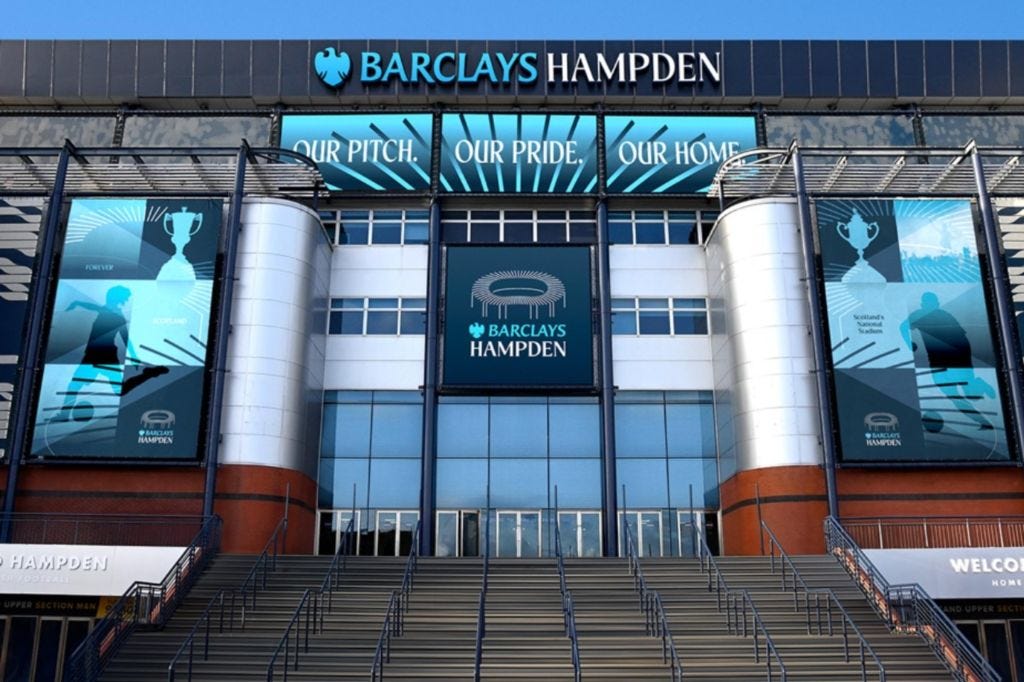
There is a familiar rhythm to Scottish football’s failures. First comes the disappointment. Then the admission. Then the urgent language. The governing bodies speak of a “reset”, a “new beginning” or a “once-in-a-generation opportunity”. A review is commissioned. A working group is assembled. A summit is announced. People are invited to discuss the “current reality” of Scottish football.
Then, eventually, the report arrives.
Its recommendations are welcomed. Its findings are described as compelling. Its conclusions are accepted in principle. And then the Scottish FA picks through the document like a child in a sweet shop, taking the bits it likes, leaving the expensive or politically awkward recommendations behind, and congratulating itself for having shown leadership.
Now we are being invited to watch the same show all over again.
The Scottish Football Association is to hold what it calls a “critically important” summit with all Scottish Professional Football League clubs at St Andrews on 4 September. The meeting will be hosted by chief executive Ian Maxwell and chief football officer Craig Mulholland, and will focus on the “current reality” facing Scottish football, the development of homegrown talent and the creation of new revenue streams for clubs.
The timing is revealing. Scotland has once again failed to emerge from the group stage of the World Cup. This was our first appearance at the finals since 1998, and yet the experience ended in the same familiar way - disappointment, recrimination and a sense that Scottish football had arrived at the grandest stage and looked out of their depth.
So the response from Hampden is not a programme of action. It is a meeting. Not a binding commitment. Not a radical restructuring. Not a plan with targets, deadlines, funding guarantees and consequences for failure.
A summit.
The summit industrial complex
Scottish football has become addicted to the language of reform while remaining terrified of reform itself.
Every few years, the same problems are rediscovered by a new collection of officials. The game lacks a coherent player pathway. Young Scottish players do not receive enough first-team football. Clubs are financially constrained. Facilities are inadequate. Governance is fragmented. Commercial opportunities are underdeveloped. The relationship between the SFA, the SPFL, clubs, schools and grassroots football is disjointed.
None of this is new. None of it requires another day away from the office in a pleasant hotel with a fancy dinner and a few drinks to wash it down with.
The McLeish review identified many of these problems more than 15 years ago. It was followed by the SFA’s “2020 Vision”, which established a series of ambitious objectives for developing and modernising the game. The Scottish FA itself presented the review as a foundation for progress, yet later assessments found that many of its recommendations had not been implemented.
That is the real Scottish football tradition, not failure to identify the problems, but failure to act when the solutions demand money, courage or a confrontation with powerful vested interests.
The authorities know precisely where the weaknesses lie. They have known for years. They have commissioned reports, appointed committees and invited politicians to speak gravely about the national game. They have generated enough recommendations to fill Hampden’s corridors from the boardroom down to the pitch.
What they have not generated is the political will to implement the recommendations that might genuinely disrupt the existing order.
It is easy to agree that Scottish football needs more homegrown players. It is easy to talk about “pathways”, “models”, “opportunities” and “stakeholder engagement”. It is much harder to impose rules that force clubs to give meaningful minutes to Scottish players, particularly when those clubs would prefer to buy cheap imports, loan players from England or gamble on an experienced journeyman.
It is easy to say facilities matter. It is much harder to find the millions required to build them.
It is easy to say clubs need more revenue. It is much harder to reform a league structure, improve the television product, modernise the commercial strategy and distribute money in a way that might upset the largest clubs. Especially when the broadcasters see Scottish Football as nothing more than schedule fillers in between showing English Premier League games, EFL games, and Women’s Super League games.
It is easy to say the game needs change. It is much harder to change the people and institutions responsible for blocking it.
The report that became a menu
The most poisonous aspect of this process is the selective implementation of reform.
A review is commissioned under the pretence that the truth will be followed wherever it leads. But once the findings are delivered, the recommendations become a menu. The SFA chooses the politically convenient options while quietly discarding anything that would require serious investment or threaten the privileges of those already in control.
That is not reform. It is institutional cherry-picking.
The McLeish review contained proposals around governance, facilities, talent development, finance and the structure of the professional game. It called for a more coherent national approach, better links between different levels of football and a stronger framework for identifying and developing players. Some progress was made. Some recommendations were accepted. But the total transformation promised never arrived.
The reasons were predictable. The money was not found at the required scale. Powerful clubs retained their influence. Competing organisations protected their territory. The system adapted just enough to claim progress without doing enough to produce a different outcome.
The result is that Scottish football can point to the existence of reviews as evidence of seriousness while pointing to the lack of implementation as someone else’s responsibility.
That is the trick.
The SFA can say it has listened. Clubs can say they have contributed. Politicians can say they have engaged. Consultants can say they have produced a framework. Everyone can leave the room feeling that something has happened.
Meanwhile, the player pathway remains broken.
Homegrown talent cannot survive on warm words
The summit will apparently “discuss opportunities” around homegrown talent and hear from clubs that have “optimised their elite talent development model”. That phrase alone should make every supporter suspicious.
“Optimised elite talent development model” is the kind of language that sounds impressive in a presentation and means absolutely nothing in a dressing room.
Young players do not need another PowerPoint presentation. They need a genuine pathway into senior football.
They need coaches who are trusted to play them. They need reserve and youth structures that are connected to the first team. They need clubs to be rewarded for developing them rather than punished for the occasional mistake made by an inexperienced player. They need a national system that stops treating the age of 18 as the point at which responsibility for development mysteriously disappears.
The findings discussed in recent Scottish football reviews have been damning. Scotland has qualified for only one of 39 possible UEFA Under-19 and Under-21 European Championships since 2000, while the number of Scottish players receiving opportunities at the highest levels of European football has declined. The transition from academy football to senior football is not functioning properly.
That should not trigger another polite conversation or another fine dining get together masquerading as a summit. It should trigger emergency action.
One obvious measure would be the introduction of a properly designed domestic homegrown-player rule. Scotland previously had a requirement involving Under-21 players before it was abandoned around the creation of the SPFL in 2013. A new system could be phased in, monitored and adjusted, but the principle should be unavoidable - clubs must be required to develop and use homegrown players.
Not because every Scottish player is automatically good enough. Not because quotas magically manufacture elite footballers. But because the current system gives clubs too many incentives to avoid the risks associated with developing young players.
At present, youth development is often treated as a charitable activity, something clubs should be praised for doing, but never required to prioritise. Managers are judged on their next result. Directors are judged on their next transfer window. Young players are judged on their first mistake.
That structure guarantees short-termism.
A domestic quota would not solve everything, but it would force clubs to plan. It would make youth development a central sporting and commercial responsibility rather than an optional extra. It would also align domestic football with the reality clubs already face in European competition, where locally trained players must be included in squads.
The clubs will object. They will warn of unintended consequences. They will demand exemptions, delays and flexibility. Some of those concerns may be legitimate. But if every meaningful proposal is abandoned because someone might be inconvenienced, then Scottish football will remain exactly where it is.
The money excuse
The SFA will also use the summit to discuss increasing revenue streams for clubs. Again, the issue is real. Scottish clubs operate in a difficult financial environment. The domestic game is relatively small, commercial income is limited, and many clubs exist under constant pressure to balance sporting ambition with financial survival.
But the financial argument has become an all-purpose excuse for inaction. When clubs are asked to invest in youth development, they say they cannot afford it. When they are asked to improve facilities, they say they cannot afford it. When they are asked to give young players a chance, they say the pressure to win makes it impossible.
Yet the same clubs continue to spend money on short-term recruitment strategies that often deliver little resale value and even less long-term benefit.
The argument is not that clubs should be careless with money. It is that Scottish football has failed to build a system in which investment in young players is treated as a financial necessity rather than a luxury.
A player developed at a Scottish club can become a first-team player, a source of transfer revenue and a reason for supporters to feel connected to the team. A succession of mediocre imports produces none of those things. It simply moves money around while leaving the underlying weakness untouched.
Scotland cannot outspend England, Germany, Spain or Italy. It cannot compete with the financial power of the richest clubs in Europe. But it can make better use of the resources it has.
That means investing in coaches. It means improving pitches and facilities. It means creating meaningful competitive football for players aged 16 to 21. It means developing a national strategy rather than leaving every club to improvise.
And it means accepting that some of the money currently spent on temporary fixes must be redirected into permanent infrastructure.
If the answer to every proposal is that clubs cannot afford it, then the question must be asked, what is the point of the governing body?
Who is responsible?
The Scottish FA cannot continue to present itself as an innocent observer of Scottish football’s decline.
It is not merely a referee standing on the touchline while clubs make independent choices. It is the governing body of the national game. It sets rules, controls structures, distributes resources, appoints officials and claims responsibility for the strategic direction of football in Scotland.
When the system fails repeatedly, the people at the top cannot respond as though they have just arrived to investigate the scene.
Ian Maxwell has been chief executive since 2018. Mike Mulraney has been Scottish FA president since 2023, and the association’s own board lists both men among those responsible for making key decisions within Scottish football.
This is not a criticism of their personalities. It is a criticism of their record and of the institutional culture they represent.
Maxwell may be an experienced administrator. Mulraney may be a committed football man. Craig Mulholland may bring valuable experience from Nottingham Forest and Rangers, including work with talent pathways and academy structures. The SFA describes his new role as one responsible for shaping football development and performance across Scotland.
But appointing a new official does not amount to a new strategy.
The problem is not that Scottish football lacks intelligent people. It is that it lacks leaders willing to impose difficult decisions on those who benefit from the status quo.
A transformative leader would not simply invite the clubs to discuss the future. They would tell the clubs what is going to happen, when it is going to happen and what will happen if they refuse to cooperate.
They would publish the full evidence. They would set measurable targets. They would attach funding to delivery. They would identify who is responsible for each recommendation. They would publish annual progress reports. They would make failure visible. Most importantly, they would accept that reform will anger people.
There will be resistance from clubs. There will be lobbying from vested interests. There will be arguments about competitive balance, cost, tradition and practicality. That is what happens when change is real.
If the SFA is unwilling to face that conflict, then it should stop pretending that it is leading.
Burn it down, or keep rearranging the deck chairs?
Scottish football does not necessarily need to burn every structure to the ground. But it does need to stop protecting structures that have demonstrably failed.
The current model has produced a national team capable of occasional qualification but not consistent progress. It has produced too few elite players. It has left clubs financially fragile. It has allowed governance to become fragmented and defensive. It has turned reform into an endless cycle of meetings, reports and delayed decisions.
The September summit will succeed only if it ends with commitments that cannot be quietly buried.
There should be a published timetable for introducing a domestic homegrown-player requirement. There should be a funded national development plan. There should be minimum standards for academy provision, coaching and facilities. There should be a clear pathway linking grassroots football, schools, academies, lower-league clubs and the national teams.
There should also be consequences. If clubs fail to meet agreed standards, they should not simply be invited back to have another chat. If the SFA fails to deliver its own commitments, its leadership should be held accountable. A governing body that cannot implement its own strategy cannot claim to have a strategy.
The question is no longer whether Scottish football needs change. That question was answered years ago. The question is whether those currently in charge are prepared to deliver it.
Ian Maxwell and Mike Mulraney may sincerely believe they can guide Scottish football into a better future. But belief is not enough. Good intentions are not enough. Another senior appointment is not enough. Another summit in another fancy hotel is certainly not enough.
The country has already had its reviews. It has had its reports. It has had its consultations, working groups, strategic plans and grand declarations. What it has not had is decisive leadership.
Scottish football does not need more people explaining the crisis. It needs someone willing to confront the clubs, challenge the boardrooms, spend the money and impose the changes that everyone claims to support until those changes become inconvenient.
If the September gathering produces another set of carefully worded ambitions, it will be remembered for what it is, a public-relations exercise dressed up as leadership.
But if it produces binding reform, proper investment and a homegrown system with teeth, then it might finally mark the beginning of something worthwhile. The choice should be obvious.
The danger is that, by the time the next summit arrives, Scottish football will still be discussing the same problems - only with a new set of presenters, a new logo and another generation of Scottish players wondering why nobody ever made room for them.