

Scotland’s return to the FIFA World Cup in 2026 has been met with a mix of excitement and frustration, as the national team learned their group stage opponents in today’s draw held in Washington D.C.
Scotland were drawn in Group C with footballing giants Brazil, African powerhouse Morocco, and Caribbean minnows Haiti. This moment, bittersweet in nature, encapsulates years of hard work, near misses, and anticipation from the Scotland camp and the Tartan Army.
Yet, reactions weren’t just limited to the draw itself and who we would be facing; many turned a critical eye to the event’s ceremony, marked by its drawn-out, overly ceremonious nature, including a highly publicised and controversial award of the inaugural FIFA Peace Prize to U.S. President Donald Trump and the brown nosing nature of FIFA President Gianni Infantino throughout to ceremony towards Trump - not to mention the cringeworthy sketches, and badly scripted small talk.
For the Scotland squad and management under Steve Clarke, the draw represents both a massive opportunity and a daunting challenge. The last time Scotland graced the World Cup stage was way back in 1998 - almost three decades ago - making the 2026 finals a historic return. To draw Brazil and Morocco once again evokes memories of France 1998, offering the players a chance to test themselves against one of the best teams in the world. Brazil’s reputation as five-time World Cup winners is unmatched and facing them is a highlight many Scottish players can only dream of. Morocco, who recently made waves by reaching the quarter-finals of the 2022 World Cup, are a reminder that Scotland faces an opponent with newfound strength and tactical nous. Haiti, meanwhile, while less heralded, represents the unpredictability and global diversity that the tournament brings, a reminder that no opponent can be overlooked. As Scotland have experienced much to our consternation over the years.
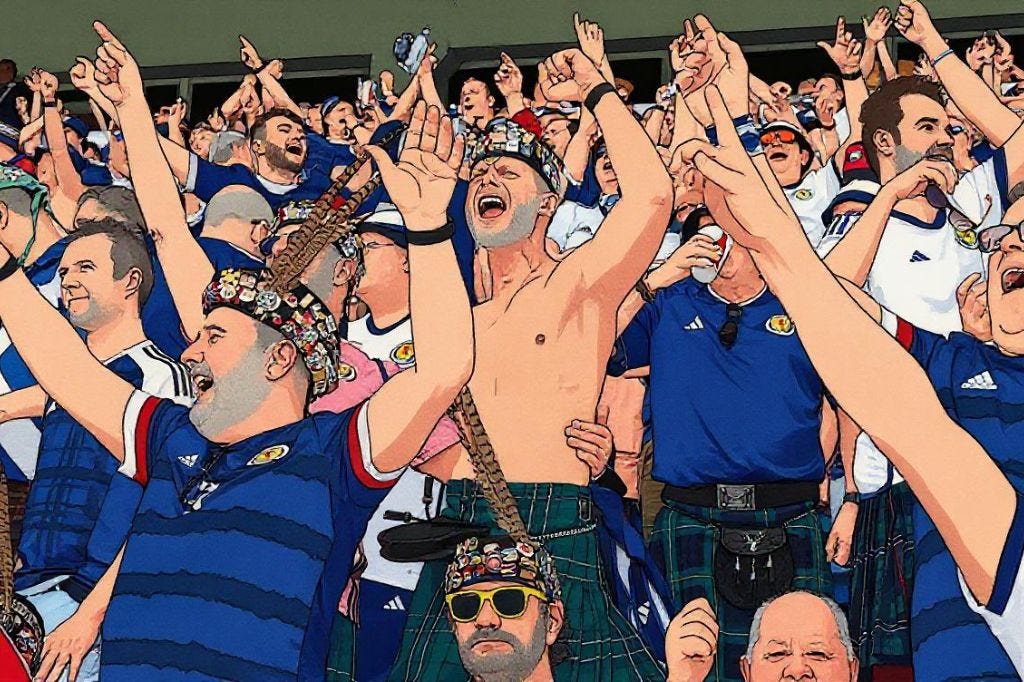
From the Tartan Army, the reaction was a blend of pride and realistic appraisal. There is an undeniable surge of excitement about witnessing Scotland back on football’s biggest stage, particularly against the mighty Brazil.
Yet, amidst the celebrations, the event itself drew considerable criticism and weary remarks from fans, media, and even insiders. The World Cup draw ceremony, normally a moment of high drama and excitement, was overly long, repetitive, full of unwelcome political overtones. Many viewers and attendees noted how the event seemed to become bogged down in excessive pleasantries and self-congratulatory speeches aimed at appeasing primarily Donald Trump rather than focusing on football and the draw itself. John McGinn and other voices in the Scottish camp expressed a sentiment that while the global stage and spectacle are vital, the ceremony felt like a slog - full of forced flattery and political pandering that tempers the genuine excitement of Scotland’s World Cup moment.
This long-winded ceremony highlighted the complex relationship between football’s governing body FIFA and global politics, sparking discussion about whether such events have become too politicised and staid. For Scottish fans, who have waited nearly 30 years to face challengers like Brazil and Morocco again on this stage, the impatience was evident on social media.
Looking forward to the matches themselves, Scotland’s journey through the tournament will be closely watched. Brazil poses the greatest threat on paper, with an illustrious squad full of talent that has raised the global benchmark time and again. For Scotland, this is a chance to prove they belong in football’s upper echelons - a chance that was a long time coming. Facing Morocco are no shrinking violets and will be a threat in their own right. While Haiti, not carrying the same weight in football history, cannot be underestimated by Scotland and represents a wildcard in the group. Each game will test Scotland’s tactical preparation, team spirit, and endurance. We need to be on the top of our game to have a chance of qualifying for the first time in our history.
In broader terms, Scotland’s participation and the composition of their group symbolise football’s international tapestry - powerhouses and underdogs, new challengers and historical giants all coming together on the world stage. The Tartan Army, already known for their unwavering support and vibrant presence at tournaments overseas, will be pivotal in providing the kind of morale boost any team would relish.
For players, coaches, and fans, the 2026 World Cup draw marks a new chapter - a culmination of nearly 30 years of hoping, planning, and fighting to reclaim their place on football’s grandest stage. The anticipation is electric but combined with a grounded respect for the challenges ahead. Scotland’s path may be tough, but it is filled with promise, history, and the spirit of a nation eager to write new chapters in their football story.
This renewed World Cup journey is not simply about matches or opponents; it is about the spirit of Scottish football, the passion of the Tartan Army, and the ongoing evolution of the sport itself. The journey to 2026 demonstrates the resilience and passion of a footballing nation ready to take its place once more among the world’s elite, even as it navigates the sometimes cumbersome machinery of global football administration. The world will watch as Scotland faces its past and future in Brazil, Morocco, and Haiti, all while the echoes of a long and winding wait still resonate in the hearts of the Tartan Army and every Scotsman who loves the game.
What do you think? Can Scotland qualify from the group stages for the first time?
World Cup Group C Schedule
Scotland will play their opening Group C game at the Gillette Stadium [home of the NFL side New England Patriots] in Foxborough, Massachusetts against Haiti at 2am [GMT] on Sunday 14th June.
Steve Clarke’s side will then meet Morocco at the same stadium on 19th June, with the second game of the campaign kicking off at 11pm [GMT].
Our final game against Carlo Ancelotti’s Brazil will be at Miami’s Hard Rock Stadium on the 24th June at 11pm [GMT].
If you are concerned about how the FIFA Peace Prize is awarded, please add your voice to our petition to FIFA:
https://www.change.org/fifa-peace-prize