

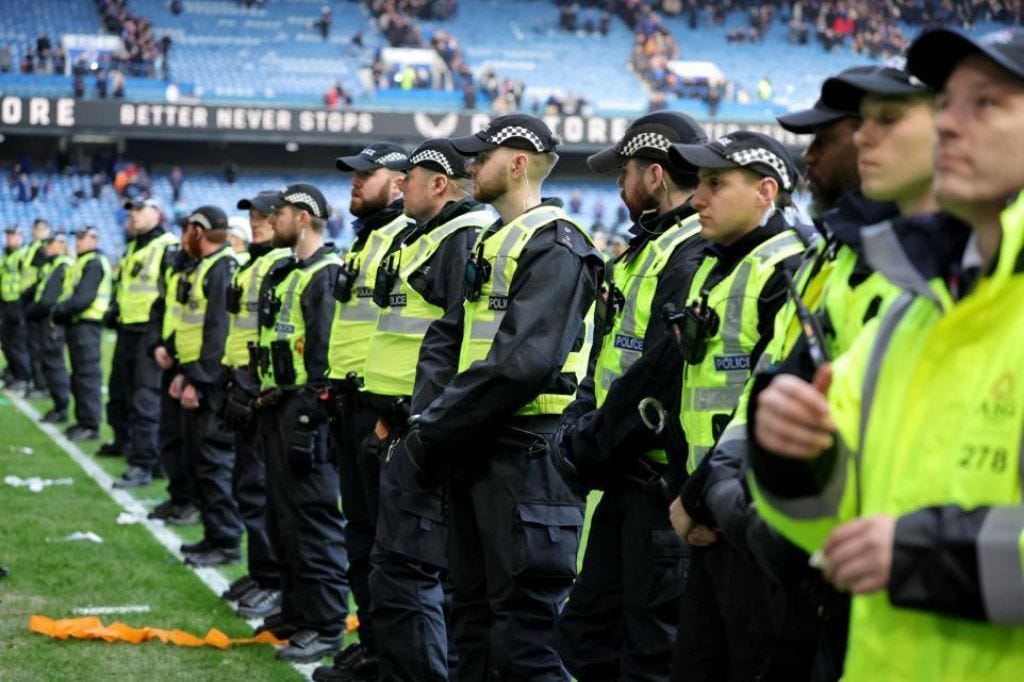
Three months on from the Scottish FA’s announcement that Mark Blackbourne would lead the independent review into the disorder at the Scottish Cup quarter-final between Rangers and Celtic at Ibrox, the silence from the Scottish FA and Police Scotland is getting louder by the day.
Freedom of Information requests have been denied as if they are being asked to disclose state secrets. This was never a request for tactics, deployment maps, or anything that would hand future troublemakers a playbook. The questions were basic, historical, and entirely reasonable. How many officers were deployed? How many were inside and outside the ground? Who was the match commander? Had they handled Glasgow derby or high-profile games before? What is the normal policing level for fixtures like Scotland international matches, cup finals, or rugby internationals?
That’s not sensitive operational intelligence. That’s public accountability.
Yet after first rejecting the freedom of information request, Police Scotland still has not answered the appeal submitted on 12 April, despite stating that a response should follow within 20 working days. Instead, it has leaned on a grab-bag of exemptions - sections 35(1)(a) and (b), 39(1), 34(1)(b), 38(1)(b) and section 18 - and wrapped it all in the familiar argument that disclosure could damage policing strategies or assist those intent on causing disorder.
That might sound impressive in an email. It does not hold up nearly so well in the real world.
There is a world of difference between revealing future tactics and explaining what happened at a match that has already been played. Knowing how many officers were on duty at Ibrox on 8 March 2026 does not compromise public safety. Knowing whether the match commander had previous experience of derby fixtures is a staffing question, not a security breach. Knowing the usual policing level for major sporting events is not a roadmap for troublemakers, it is basic context for the public.
Police Scotland cannot have it both ways. It cannot admit that disclosure would improve public understanding and accountability, then hide behind broad exemptions when asked for nothing more exotic than historical facts. If transparency really matters, then transparency should begin with the easy questions, not end when the scrutiny gets uncomfortable.
And that is where this starts to look less like caution and more like avoidance.
The Scottish FA says an independent review is under way. Fine. But three months later, the public still has no meaningful update, while Police Scotland is stonewalling over simple questions that should have been answered long ago. That combination does not build confidence. It breeds suspicion.
Nobody is asking for secrets. Nobody is asking for live operational detail. Nobody is asking for anything that would put officers, supporters or the public at risk. What is being asked for is the most basic information - who was in charge, how many were there, and how much policing was deemed necessary for one of the biggest matches in Scottish football.
If the SFA and Police Scotland want supporters to believe this is about transparency, accountability and learning lessons, then they need to start acting like it. Instead, we get announcements, delays, refusals and silence - the familiar rinse-and-repeat routine whenever football authorities and the police are asked to explain themselves. They are being asked basic questions about a major flashpoint in Scottish football and giving the runaround in return - all the while pointing the finger of blame on others. That is not good enough, and if those in charge think fans will simply swallow it, they have badly underestimated how little patience remains for half-truths, stonewalling and the old-fashioned Scottish football habit of circling the wagons when scrutiny gets uncomfortable.
Spot on!!