

Scottish football didn’t lose the plot last week. The people who watch it and cover it did.
One refereeing decision. One handball. One penalty. And suddenly the sport in this country was being portrayed as corrupt, rigged, and fundamentally broken- not just by fans on message boards, but also by pundits, politicians, podcasters, and journalists, who should know exactly what they’re doing when they press publish or hit record.
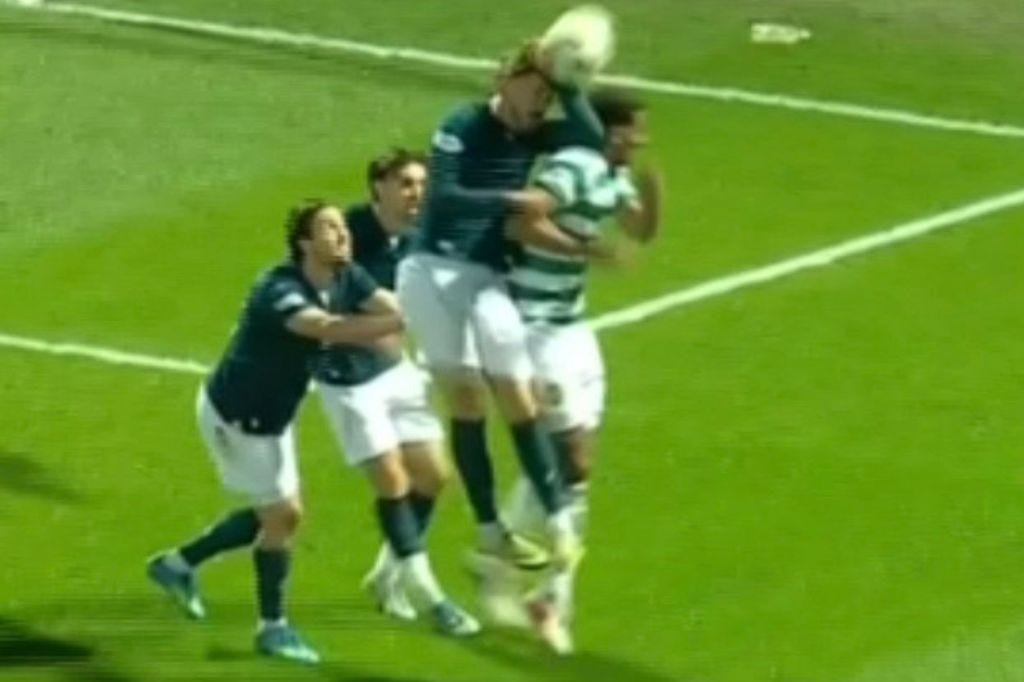
The Sam Nicholson handball decision didn’t just decide a game. It triggered a full-blown meltdown among the media.
And the fallout? A referee needing police protection. His home address plastered online by a twisted teenager. Officers stationed outside his house. An escort required just to carry out basic, everyday tasks like going down to the shops.
That is not football debate. That is what happens when reckless voices whip people into a frenzy and then step back as the consequences land.
Because let’s not pretend this came out of nowhere.
This was built. Brick by brick. Tweet by tweet. Headline by headline.
The outrage didn’t grow organically - it was manufactured.
You had Scottish mainstream journalists pushing insinuations instead of analysis. You had bloggers and podcasters- many of them openly aligned to Rangers and Hearts - presenting opinion as fact and feeding their audiences a steady diet of grievance [and I have done it myself over the years]. You had English pundits, who barely watch Scottish football outside of the Glasgow derby, parachuting in to pass judgement on a league they don’t watch simply from one single refereeing decision.
Gary Lineker. Simon Jordan. Voices with huge platforms, offering strong opinions with minimal context. Even Ally McCoist, having woken up from his drunken stupur claiming his pals were calling the decision corrupt - when he didn’t have the balls to say it himself on Talksport.
And then, inevitably, the politicians arrived. Because nothing says “measured football discourse” like elected and unelected officials weighing in on VAR decisions. Some of whom support Hearts.
All of them circling the same narrative - something wasn’t right here. That it looks like the title had already been predetermined.
Not “that’s a tough call.” Not “I’ve seen them given.” No - this was framed as something darker. Something suspicious. Something corrupt. Something that demanded outrage.
And outrage is exactly what they got.
But here’s the part that tells you everything you need to know, what they didn’t talk about.
They didn’t talk about Daizen Maeda being taken out earlier in the same game. A clear penalty shout. Ignored.
They didn’t talk about Hibs captain Joe Newell’s handball in the previous match. Another decision that went under the radar.
They didn’t talk about the countless marginal calls- week after week, across the entire season - that didn’t spark days of hysteria because they didn’t fit the narrative.
And they certainly didn’t talk about VAR actually getting something right on the final day either. It was another penalty for Celtic - surprise surprise.
Because while everyone was busy screaming about corruption, VAR stepped in to prevent one of the most embarrassing offside decisions you’ll ever see. Flag up. Wrong player. Wrong call. Goal wrongly chalked off - until VAR corrected it.
Daizen Maeda scores to give Celtic the lead and the upper hand in the title race on the final day of the season.
Silence.
No outrage. No panel debates. No moral grandstanding. No calling out the linesman for one of the worst decisions ever seen this season - and that is coming from someone who has watched a ton of football this season both north and south of the border. And you can throw European and International football into the mix also.
Because that doesn’t sell.
What sells is grievance. What sells is controversy. What sells is the suggestion - subtle or otherwise - that the whole thing is bent in favour of one club - Celtic. Why? Because they were all rooting for Hearts to break the Glasgow monopoly on the league title or at least prevent Celtic from winning it again for the 14th time in 15 years.
And once that idea is out there, it takes on a life of its own.
Suddenly every decision is evidence. Every call is suspect. Every official is under scrutiny - not for competence, but for integrity.
That’s the leap Scottish football made last week.
And it’s a dangerous one.
Because when you stop debating decisions and start questioning honesty and integrity, you change the stakes entirely.
John Beaton wasn’t just criticised - he was vilified. Not just wrong, but corrupt. Not just mistaken, but part of something bigger.
That language matters.
It matters when it’s coming from pundits with national platforms. It matters when it’s being echoed by journalists. It matters when it’s repeated by influencers with thousands of followers hanging on every word.
Because someone, somewhere, is always going to take it further.
And this time, someone did.
A teenager posts an address online. A line is crossed. And suddenly we’re no longer talking about football - we’re talking about safety.
But by then, the people who helped create the environment for that to happen have already moved on to the next story, the next outrage, the next talking point.
No accountability. No reflection. Just noise.
And plenty of it.
Take the latest conspiracy doing the rounds from the weekend game, the claim that the title-deciding match wasn’t properly ended. That there’s a “missing minute.” That somehow, incredibly, Celtic’s title win is built on a procedural cover-up.
The SPFL shuts it down quickly. Clear statement. The referee followed protocol. The game was completed.
Hearts have had the audio since Sunday.
And yet… the theory lives on.
Why? Because it’s useful. Because it keeps the anger simmering. Because there’s an audience that wants to believe it.
And once again, instead of challenging it, parts of the media indulge it.
Journalists giving airtime to claims they would normally dismiss in seconds. Bloggers doubling down. Podcasters turning it into content.
It’s not about truth. It’s about traction.
The same pattern played out after the final whistle.
Initial reports- pushed out quickly, eagerly - claimed Hearts players had been assaulted during the pitch invasion. Serious allegations. Strong language. Picked up and spread far beyond Scotland within minutes.
There was just one problem.
The footage aired didn’t back it up.
What it showed was unacceptable, yes - fans on the pitch, goading, gesturing, getting in players’ faces. It should never have happened. But assault? That’s a very different claim.
And yet that’s the word that was used.
Until it quietly wasn’t.
“Assault” became “goading.” “Attacked” became “accosted.” The language softened as reality set in.
But where were the corrections? Where were the explanations? Where was the accountability for getting it wrong in the first place?
Nowhere to be seen.
Because by then, the damage had already been done. The narrative had travelled. The outrage had landed.
And in the current media landscape, that’s all that really matters.
Scottish football has always had tribalism. It’s part of the fabric of the game. Fans argue, disagree, shout, and moan. That’s normal.
What’s not normal is the scale and intensity of the amplification we’re now seeing.
Social media accelerates it. Podcasts monetise it. Mainstream outlets package it. And suddenly, a single refereeing decision becomes a national scandal.
Not because of what actually happened - but because of how it’s framed.
And make no mistake, framing is everything.
When similar - or worse - incidents happen elsewhere, the reaction is nowhere near as sustained.
Objects thrown at players? A day or two of coverage.
Sectarian chanting? Addressed when convenient, ignored when not.
Fans bringing weapons into stadiums? A headline, then gone.
But a contentious decision involving Celtic?
That’s a week-long event. Panels. Columns. Phone-ins. Social media storms. Endless dissection.
Because it guarantees engagement. It guarantees clicks. It guarantees attention.
It’s easy. Too easy.
And that’s the real issue here.
This isn’t about one penalty. It’s about a culture that rewards exaggeration over accuracy, outrage over balance, and noise over substance.
It’s about a media ecosystem that too often acts like a participant rather than an observer - fuelling the very fires it then reports on.
And yes, Scottish football needs to improve transparency. The current system invites suspicion. Sanitised review shows with no real scrutiny don’t build trust - they erode it.
Release the audio. Show the conversations between match officials and even with players. Invest in proper VAR technology instead of a cut-price version.
Give fans clarity.
But even that won’t fix what we’ve just witnessed.
Because this isn’t just a governance problem. It’s a credibility problem.
And it sits squarely with those who shape the conversation.
Celtic didn’t win the league because of one decision. They won it because, over the course of a season, they fought tooth and nail through chaos on and off the field to take it down to the final weekend of the season and were the best team on the day.
They handled pressure. They found results. They delivered when it mattered.
Hearts didn’t lose the title because of one moment. They lost it across a campaign - dropped points away from home, missed opportunities, and ultimately falling short when the stakes were highest.
Rangers didn’t fall behind because of referees. They fell behind despite spending £40 million this season and expectation from their supporters following the 49ers takeover.
These are uncomfortable truths for some.
So instead, we get a simpler story. A louder story. A more convenient story.
One decision. One villain. One club. One grand conspiracy.
It’s easier to sell.
It’s easier to believe.
But it doesn’t make it true.
And the longer Scottish football allows that kind of narrative to dominate, the more damage it does - not just to referees, not just to clubs, but to the credibility of the entire game.
Because if everything is corruption, then nothing is.
And if every decision is framed as evidence of bias, then the sport stops being about football altogether.
It becomes something else. Something uglier.
That’s where we are right now.
Not because of a handball.
But because too many people decided that outrage was more valuable than honesty.
Every word is true.
Perfect.👌