

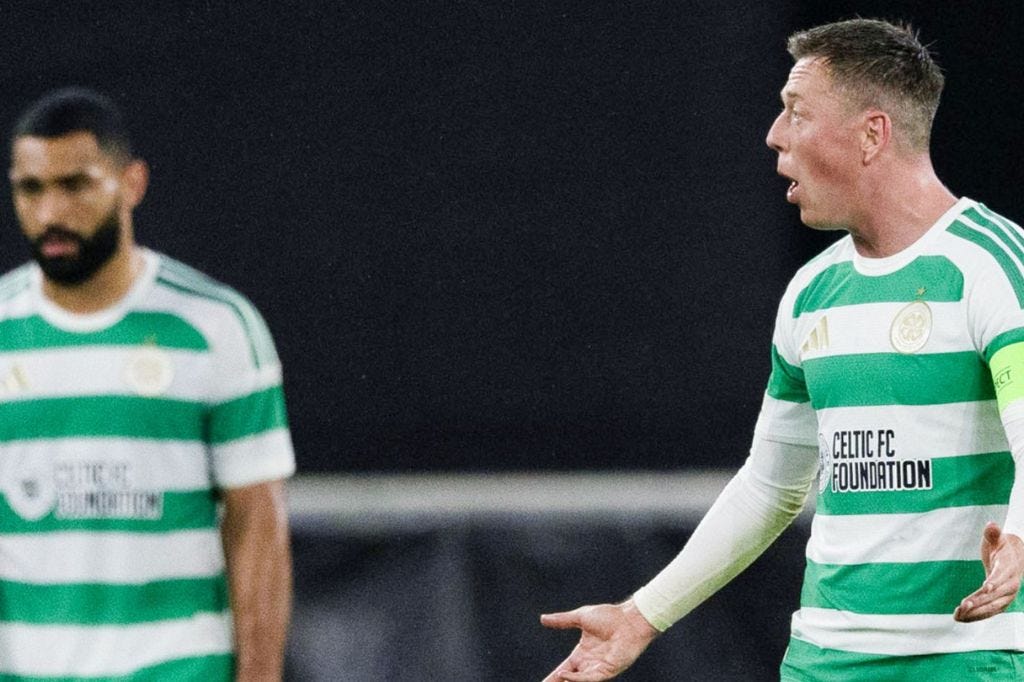
Before a ball was kicked in Linz on Tuesday night, the Raiffeisen Arena fell silent. LASK observed a minute’s silence for the Celtic supporter who died during the first leg at Celtic Park. It was a dignified, human gesture from a club and a fanbase who understood that football, at its best, is bigger than results. What followed from Celtic, however, was an act of sporting self-sabotage so complete, so baffling, that it made that tribute feel like a cruel prologue to a night of humiliation.
This was not a narrow defeat. This was a capitulation. From 4-0 up on aggregate and cruising to the Champions League, Celtic collapsed to lose 5-1 after extra time and 5-4 on aggregate, surrendering their place in Europe’s elite competition for the second year in a row. The scale of the reversal is not just painful; it is damning. And when the dust settles, the questions are not about bad luck or refereeing decisions. They are about mentality, fitness, tactics, recruitment, and a board that has once again gambled with the club’s future and lost.
A game plan that invited disaster
Martin O’Neill returned to Celtic Park as the man who could steady the ship, but in Linz his game plan looked like it had been designed in a different era of football. The first leg had been won with intensity and a willingness to attack space; the second leg was played as if the tie was already won.
After Callum McGregor’s deflected strike put Celtic 4-0 up on aggregate, the team’s posture changed. Instead of managing the game with controlled possession, they sat back and invited pressure. Instead of pinning LASK back with a high line and aggressive pressing, they sat deeper, allowed Moses Usor and Samuel Adeniran to run at them, and gave Robert Ljubicic and Sascha Horvath time to pick passes. The first LASK goal came from a slack backpass from Benjamin Nygren; the second from Ljubicic being afforded “far too much time and space on the edge of the area”; the third from a sweeping Adeniran strike from range. These are not freak goals. They are the predictable consequences of a team that has decided, consciously or not, that they had done enough and that survival is the plan.
O’Neill’s post-match admission that “we should have been out of sight by half-time” only underlines the tactical failure. If you are not out of sight when you are four goals up on aggregate, your game management is broken. The manager’s honesty - “that’s my team and that’s my responsibility” - is welcome, but it does not absolve the strategy that allowed LASK to complete a rout.
A mentality that folded under pressure
The most damning indictment of this Celtic side is not the goals they conceded, but the way they behaved once the momentum shifted. For a club that prides itself on grinding out results in the biggest games, the collapse in Linz was a crisis of character.
Callum McGregor’s post-match words were brutal because they were true: “We got what we deserved. We were passive all night. We looked scared to go and win the game.”
That is not the language of a team that was unlucky; it is the language of a team that lost its nerve, that bottled it. When LASK pulled one back before half-time, Celtic should have responded with a period of controlled possession, a tactical foul, a yellow card, anything to slow the tempo. Instead, they conceded again two minutes into the second half and never regained control.
The body language told the story. As soon as LASK got within one goal on the night, Celtic looked physically spent and mentally defeated. There was no foot on the ball, no calming influence, no leader willing to turn the game down a notch. In the biggest moments, when the Champions League was still there to be taken, no one took responsibility. And it was inevitable that LASK were going to get the goal to qualify for the league phase of the competition.
Fitness and fundamentals
This collapse was not just mental; it was physical. The drop-off in intensity between the first 30 minutes and the remainder of the match was stark. Celtic started brightly, took their chance, and then looked like a team that had not prepared for the possibility of a fight.
The basics were missing from front to back. Defenders made slack backpasses. Midfielders were posted missing or gave away cheap possession. Attackers failed to hold the ball up or win fouls in dangerous areas. When LASK attacked relentlessly in the second half, Celtic were “unable to place a pass or clear their lines with any conviction”. That is not bad luck; that is poor conditioning and poor preparation. What were Celtic doing all weekend, did they actually use it to prepare for the LASK game? It would probably have been better to have played against St.Johnstone.
In extra time, when the tie was effectively a one-off shootout, Celtic were the ones who looked oncec again leggy and second-best. Adeniran’s 109th-minute rocket was the culmination of a night in which LASK were the fitter, sharper, more committed team. For a club that demands maximum effort in every game, this was a failure of the most basic kind.
The continued misuse of key players
One of the most frustrating aspects of this defeat was the continued deployment of players in positions that do not suit their strengths. O’Neill shoe-horned Yang Hyun-jun in at left wing - when we had a natural left winger in Tounekti sitting on the bench [not that he did anything when he came on]. We played Duran on the right when we have a right winger in Hassan sitting on the bench. Hogh clearly isn’t a target man, but that’s what he was deployed as last night and every ball that was sent his way was promptly picked up by LASK to launch another attack.
Yang did create the assist for McGregor’s goal, but for the rest of the night he was exposed defensively, contributing to the sense that Celtic were playing with a structural imbalance.
Similarly, Camilo Duran, who had been outstanding in the first leg with two goals, was not used to maximum effect in the second. Whether through injury, fatigue or tactical choice, his influence was muted when Celtic needed a spark. The sense that O’Neill is still trying to force square pegs into round holes is deeply concerning.
A board that gambled and lost
None of this exists in a vacuum. The collapse in Linz is the latest chapter in a story of recruitment and planning that has left Celtic perpetually one or two steps behind. The board’s failure to strengthen the squad significantly ahead of this tie is glaring. In a season where the financial and prestige stakes of Champions League qualification are higher than ever, the club once again gambled on a thread bare squad, on players out of position, and on the hope that the job from the first leg would be enough.
It was not. The result is another Europa League campaign, another £20 million-plus blow to the club’s finances, another humiliating defeat, and another season of playing catch-up in the transfer market. O’Neill’s post-match comment that “if you could qualify for the Champions League there would be players wanting to come on that basis. That’s not going to be the case” is a damning indictment of the board’s strategy. They have gambled on the future and lost, and the players and fans are left to pay the price.
What now?
Celtic will learn their Europa League fixtures on Thursday and return to domestic action against Falkirk at the weekend. But the damage from this night will linger on. The club will once again face uncomfortable questions about recruitment, about the culture that allowed such a collapse to happen, and once again face rising fan unrest which will ultimately hit ticket sales for the Europa League games. O’Neill must find a way to restore belief, but belief without better players and a better plan is just wishful thinking.
For the fans, the pain is acute. They watched their team throw away the tie of the season, watched a dignified tribute to a lost supporter followed up by a night of shame and humiliation. The players and manager have apologised, but apologies are not worth the paper they are printed on. Only action will do that. And after Tuesday night, action is the one thing Celtic must deliver, because just now they are a club that is forever remembered not for what it achieved, but for what it threw away when it comes to European football.
It's going to be a difficult few days Andy and lots of finger pointing however, this is a collective failure across every department of the football club. I've stated previously - and the evidence is stark - that this Board has no ambition whatsoever: the threedbare squad, penny pinching in the transfer market, I could go on. Regardless of that dimension, the total collapse and lack of belief on the park from a position of 4 up with an hour of the tie to play is alarming and disheartening - not a good look for the coaching staff or the players. I have nothing but respect for MoN and for what he has achieved for our football club but his time to call it a day was after the Cup final - health and family first. His appointment was the easy option for this Board as they know they have nothing to offer and the appointment would appease the support and offer them protection. Having accepted the challenge, for my part I've found it astonishing that MoN did not make strengthening the midfield, adding physicality to the spine of the team a priority. As I say collective failure and the fallout - financially and with the prospect of a B list transfers and agent driven loan deals - will be acute and will shape the season ahead.
MON cannot be blamed for injuries but his tactics and personnel on the field is down to him FFS!!!
A week ago we were there so selling Engels was covered, we were about to spend an unprecedented MORE millions on what we thought was a strong squad. How wrong we all were, there isn't one player or area who escapes blame for that pile a dug shit.
Sinisalo let those long range daisy cutters past him too easily, our whole defence just collapsed in full view, the midfield........wow! Where do we start? After such a start to the season Nygren rolled back 12 months, never put a foot right, schoolboy passback was fckn unbelievable and caused the negative mindset which took over from there. Baur was a headless chicken and looked too easily brushed aside, McGregor tried his best but his terrible passing and panicking was so out of character, Hatate I hoped would give us one last hurrah, nope his head was already elsewhere, anywhere but Celtic, MacCowan! Couldn't do anything right, every touch was wrong he was the worst player on the pitch.
Our forward line, Yang setting up the goal was the only thing he did right, the rest of the 70 mins he was on was more dog shit, then we come to Tounekti, he couldn't get past any defender in a Ferrari, EVERY time he passed was backwards after shitting himself when up against a defender. The front two went from heroes to zeros in less than a week, why weren't Hussan and/or Osmand introduced???
I thought our board had woken up after spending £30m+ already when in the past that kind of cash wouldve been hoarded, I honestly dont know where we go from here, this result, not the dire performance, will haunt us for years, are MON's tactics outdated? If they are why didn't Maloney pipe up and say so? Sky sport will have a field day, Talksport will have a field day, BBC Scotland will have a field day and we're supposed to sympathise with MacCowan having to delete his Instagram page.
Almaty was awful in its own way, but losing a 4 goal lead, to a decent team TBF, is totally and utterly unforgivable.
I'M AWA TO MA BED FOR 6 MONTHS!